I just finished reading Suzannah Libscomb's book "1536: The Year That Changed Henry VIII." This was a great non-fiction read and I finished it in one day. The book discusses how the year 1536 changed Henry VIII forever. It was in this year that he lost his first wife, Catharine of Aragon in January. A few days later Anne Boleyn miscarried another baby boy. Anne was accused of adultery in May of 1536 and executed in the same month, along with five men, all reputed to be good friend's of Henry's with the exeption of the musician Mark Smeaton. In July of that year Henry's illegitimate son, Henry Fitzroy died. Lipscomb argues that the horrible events of this year changed Henry's view of himself and the world forever. He suffered so much loss during this one horrible year that I imagine he did have a hard time recovering. He was reportedly close with his son Fitzroy and exhibited erratic behavior at the boy's death, ordering the Duke of Norfolk to bury him in secret and then reprimanding him for following these orders several days later. Are these the strange actions of a grieving father and a husband who's wife died, a wife he went to the ends of the earth to marry? Or, are they the early acts of a man who was going insane?
Lipscomb argues that Henry believed Anne Boleyn to be guilty of adultery, that this was the only way, as a sane human being, that he could have turned on her so viciously. The king and Anne were reportedly "making merry together" in late April of 1536. What happened in those few days that ended with the death of the love of Henry's life? I certainly have never met a man who would fight for and wait 10 years on a woman he did not love. Lipscomb reports that the rumors of the queen's infidelity came from the Countess of Worchester, one of Anne's ladies in waiting. She was chastised for her own loose behavior by her brother and apparently accused Anne of questionable behavior as well. These accusations were brought to the attention of Cromwell who brought them to Henry. An investigation ensued and Anne and several others were arrested. We all know how the story ends, but is it possible that Henry believed his wife betrayed him? Did this betrayal put him on the road to madness? I have discussed Henry's madness in earlier posts, but Lipscomb is right, until 1536, he was not nearly as crazy as he was after that year, at least he did not appear to be. I think betrayal and divorce is like a death, the death of a relationship and the death in one's heart of the one they loved. In this case it ended in the very real death of six people, which in reality probably compounded Henry's grief. If he in fact believed that Anne was guilty then he was most likely already mourning her and the person he thought she was. His grief most likely turned to fierce anger and ended up with him ordering her execution after her sham of a trial. Libscomb writes that Henry took a morbid interest in the practical arrangements of Anne's execution such as the building of the scaffold and the hiring of an extrememly expensive executioner from Calais. I would almost call this his final act of love as this French executioner cost more than most men made in a year and was reputed to be very skillful, killing his victims in one stroke of the sword. This would have been a wonderful alternative to the axe, a form of execution that was often botched and saw the executed literally hacked to death.
Lipscomb's book provided a unique and often untapped perspective on the change in Henry VIII after 1536. I also enjoy her theory that Henry believed Anne to be guilty, othwerwise how could so great a love turn so quickly to so much hatred and malice? I would fear to think that Anne was not savy enough to see all of this coming if in fact Henry was vindictive and nutty to begin with. I don't think she would have gone for that after loving a man so gentle as Henry Percy. She does not strike me as the type of girl who is so blinded by love that she sees no faults in a man. I think she saw plenty of them, and told him about them all. From all written accounts it does not appear that she held her tongue often. Maybe she would have, the truth is, we really don't know. All that does appear obvious is that something went horribly wrong and Henry turned on his wife like a mad dog turns on it's master. From 1536 on he appears to sink deeper into madness and tyranny.
The video below shows Anne and Henry considering the downfall of their marriage. Pure sadness.
Thursday, September 23, 2010

Tuesday, September 21, 2010
Anne Boleyn in Fiction: The Good, The Bad, and The Ugly
This summer I decided to go back and re-read The Other Boleyn Girl, the book that drew me into historical fiction as a genre, well, really the only genre that I want to read. I think that this book in particular drew many people into reading about the past, whether in novels or non-fiction books, this book, and the horrible movie made from it is what I feel started a passion for Tudor fiction in readers everywhere. The book was excellent, a page turner until the end, just as I remembered. What I also found to be true in this book is the fact that I despised Gregory's portrayal of Anne Boleyn. The Anne in this book had almost no humanity, no softness, no weakness which could be related to. She was all nerves and steel with a fake til you make it attitude and she did not mind stepping on anyone to make it. This Anne was conniving, self-centered, mean spirited and driven with some sort of inner tornado. This Anne was a horrible, spiteful person who loved no one, except her brother George. He a little too much it is suggested as he and Anne reference going to "the gates of hell itself" to get an heir for England. This Anne is a hard, dark person to me.
So, I started thinking about Anne in other books that I have read over the years. I liked Anne Boleyn in "Secrets of the Tudor Court" which is told from the perspective of Mary Howard, Anne's cousin. This Anne is sharp, nervous, quick to sting, but also quick with kindness. Mostly she just seems a nervous wreck, a dignified one, but a nervous wreck. Who could blame her? Her husband was cheating on her, she was losing babies, rumors were flying, and her own family was spying on her to make sure she behaved in a way that would benefit them. She knew she would be betrayed and she was. This Anne I liked. This Anne was human.
I liked Anne in Dear Heart, How Like You This told from the point of view of Thomas Wyatt. She was lively and full of life, but was broken when she lost Henry Percy. She became vengeful and angry and won Henry as a means of revenge. This Anne just makes me sad. An Anne that I loved was the Anne in Brandy Purdy's "The Boleyn Wife." This Anne mocked Jane Rochford from the grave, something which I thought was appropriate to do to the woman who helped bring about her death and the death of George. I loved her black humor in this book and how she taunted Jane by removing her head and putting it back on in one of Jane's hallucinations.
My favorite Anne of all time is Natalie Dormer on "The Tudors" but a close second is the Anne in Nell Gavin's "Threads." This Anne is introspective, sad, alternately sympathetic and angry, and had a fully developed, well rounded character. At times I thought she was more of a girl than a woman, but I loved her insight and how much she grew and changed during her many lives. The insight she gained was invaluable and she learned how she became Anne Boleyn, and how this affected all of her lives afterwards. This Anne, she was amazing and how I like to think Anne Boleyn would have been. The story is complicated, allowing Anne to view many of her lives after her life as Anne Boleyn has ended and she comes to understand the complicated relationship she has with Henry. She learns to appreciate the simple, worship-like love that Henry Percy has had for her through several lifetimes. She finally understands that she and Henry are soul mates, and destined to be together over and over and over, forever, until they make it to heaven. It is a beautiful story with an amazing Anne Boleyn as the main character. This is an Anne that I can love. I can't wait to read more, no matter how many times you meet a character in a story, they are always different, never the same person. It's one of the best pieces of magic that books have to offer!
So, I started thinking about Anne in other books that I have read over the years. I liked Anne Boleyn in "Secrets of the Tudor Court" which is told from the perspective of Mary Howard, Anne's cousin. This Anne is sharp, nervous, quick to sting, but also quick with kindness. Mostly she just seems a nervous wreck, a dignified one, but a nervous wreck. Who could blame her? Her husband was cheating on her, she was losing babies, rumors were flying, and her own family was spying on her to make sure she behaved in a way that would benefit them. She knew she would be betrayed and she was. This Anne I liked. This Anne was human.
I liked Anne in Dear Heart, How Like You This told from the point of view of Thomas Wyatt. She was lively and full of life, but was broken when she lost Henry Percy. She became vengeful and angry and won Henry as a means of revenge. This Anne just makes me sad. An Anne that I loved was the Anne in Brandy Purdy's "The Boleyn Wife." This Anne mocked Jane Rochford from the grave, something which I thought was appropriate to do to the woman who helped bring about her death and the death of George. I loved her black humor in this book and how she taunted Jane by removing her head and putting it back on in one of Jane's hallucinations.
My favorite Anne of all time is Natalie Dormer on "The Tudors" but a close second is the Anne in Nell Gavin's "Threads." This Anne is introspective, sad, alternately sympathetic and angry, and had a fully developed, well rounded character. At times I thought she was more of a girl than a woman, but I loved her insight and how much she grew and changed during her many lives. The insight she gained was invaluable and she learned how she became Anne Boleyn, and how this affected all of her lives afterwards. This Anne, she was amazing and how I like to think Anne Boleyn would have been. The story is complicated, allowing Anne to view many of her lives after her life as Anne Boleyn has ended and she comes to understand the complicated relationship she has with Henry. She learns to appreciate the simple, worship-like love that Henry Percy has had for her through several lifetimes. She finally understands that she and Henry are soul mates, and destined to be together over and over and over, forever, until they make it to heaven. It is a beautiful story with an amazing Anne Boleyn as the main character. This is an Anne that I can love. I can't wait to read more, no matter how many times you meet a character in a story, they are always different, never the same person. It's one of the best pieces of magic that books have to offer!
Tuesday, August 24, 2010
A Book Review and Some Great New History!
I just finished reading "Secrets of the Tudor Court" by D.L. Bogdan and it was a truly unique book. The book is told from the perspective of Mary Howard, daughter of the Duke of Norfolk. The book focuses on Mary's relationship with her father, the Duke, and it's difficulties. Poor Mary is a child and a woman who craves parental affection, something she is never given. Her life is filled with difficulties and disillusionment, starting with the discovery that her father and her governess are having an affair and that her father is horribly abusive to her mother.
She is placed in the court of Anne Boleyn and becomes a spy for her father hoping to win his affection. She is devastated by the loss of Anne and horrified at the King's shocking betrayal of his wife. She is married to the King's illegitimate son, Henry Fitzroy but never allowed to live with him as his wife. She is later informed by her father that this is because he knew that Henry VIII was planning to poison the boy and he did not want her endangered. This further complicates Mary's relationship with her father because he kept her away from a man she loved to protect her. She both hates him and loves him, it's never easy with him.
She goes on to become a maid in Katherine Howard's court and is again crushed by her death. She leaves court, raises her brother's children and later dies. I won't say this was a happy story, but it was a very good story.
Two fascinating pieces of history have come to light in the past week, one being the discovery that the most famous portrait of Anne Boleyn was commissioned by someone who knew her and was painted within living memory of her, so perhaps it is a good likeness. The other is that the location of the battle of Bosworth field has been discovered, this is the battle which brought the Tudor dynasty to the throne and in which Richard III, the last Plantagenet King was killed. A boar badge, Richard's symbol was one the things dug up on the field by archaeologists. Can you imagine getting touch such a piece of history? Richard distributed the badges to his nights, can you even dream about how amazing it would be to touch something that Richard III may have touched?! It gives me chills! You can read more about these discoveries over on the Anne Boleyn files, run by the amazing Claire Ridgeway! ( http://www.theanneboleynfiles.com/ )


She is placed in the court of Anne Boleyn and becomes a spy for her father hoping to win his affection. She is devastated by the loss of Anne and horrified at the King's shocking betrayal of his wife. She is married to the King's illegitimate son, Henry Fitzroy but never allowed to live with him as his wife. She is later informed by her father that this is because he knew that Henry VIII was planning to poison the boy and he did not want her endangered. This further complicates Mary's relationship with her father because he kept her away from a man she loved to protect her. She both hates him and loves him, it's never easy with him.
She goes on to become a maid in Katherine Howard's court and is again crushed by her death. She leaves court, raises her brother's children and later dies. I won't say this was a happy story, but it was a very good story.
Two fascinating pieces of history have come to light in the past week, one being the discovery that the most famous portrait of Anne Boleyn was commissioned by someone who knew her and was painted within living memory of her, so perhaps it is a good likeness. The other is that the location of the battle of Bosworth field has been discovered, this is the battle which brought the Tudor dynasty to the throne and in which Richard III, the last Plantagenet King was killed. A boar badge, Richard's symbol was one the things dug up on the field by archaeologists. Can you imagine getting touch such a piece of history? Richard distributed the badges to his nights, can you even dream about how amazing it would be to touch something that Richard III may have touched?! It gives me chills! You can read more about these discoveries over on the Anne Boleyn files, run by the amazing Claire Ridgeway! ( http://www.theanneboleynfiles.com/ )


Saturday, July 17, 2010
Centuries of Lies? Part 2
So, when we left off Richard III had named himself King of England. His son and heir was named Prince of Wales and everyone seemed to be happy, more or less. However, plots to dethrone Richard and put the young Edward V on the throne began to develop. Elizabeth Woodville, conniving queen that she was, plotted with Margaret Beaufort, mother of Henry Tudor to bring Henry back into England from France with an army he would raise on the continent and together with the Duke of Buckingham and his forces and those raised by other lords Henry would take the throne of England and marry Elizabeth of York, the eldest daughter of Elizabeth Woodville and Edward IV. This would not make Elizabeth Woodville's son king, but it would make her daughter queen. This plot was discovered, however, and the discovery, in addition to rain which flooded much of the north of England prevented Henry Tudor's forces from moving south towards London. Buckingham was arrested and inevitably executed. Everyone else seems to have been granted clemency, including Margaret Beaufort, who was married to Lord Stanley, a powerful lord who owned so much land in England that his eventual abandonment of Richard on the battlefield at Bosworth would lead to his downfall. Such powerful landowners commanded legions of troops and their allegiance could make or break a king.
Time passed and later that year Richard's only son died followed by his wife, Anne Neville. Anne and Richard were cousins who grew up together and he most likely mourned the loss of a wife he truly loved. More time passes and a second rebellion against Richard is raised by Woodville and Beaufort. Henry Tudor came into Wales with his uncle Jasper Tudor, who himself was a great lord in Wales. The Tudors marched down through England collecting troops as they went. They met Richard's army at Bosworth where the king himself was leading his army. At the last minute Lord Stanley ordered his troops to switch sides and start fighting against Richard and his men and Richard, who had been unhorsed, was killed. It is said he went down fighting and yelling for a horse. Henry Tudor rode into London in triumph after being crowned king Henry VII on the battlefield. Five months later he married Elizabeth of York and united the red and white roses of England, or the houses of York and Lancaster, Tudor and Plantagenent.
Henry quickly moved to have the act of Titulus Regius destroyed, not repealed, but destroyed. If the act were left in existence it would draw into question the legitimacy of his wife, and if it was repealed it would declare Edward V to be the rightful king of England. It was a double edged sword for Henry. So he did the only thing he could do and obliterated the memory of such a law. He passed a bill of attainder against Richard III accusing him of tyranny and cruelty but supposedly not of killing the two princes. I have not been able to verify this fact, but if it is true and the princes were in fact missing and had been killed by Richard why would Henry not charge him with the crime? It would be his biggest smoking gun and would make people loathe Richard and gladly accept their new king, whose claim to the throne was tenuous. Anyhow, Henry's queen Elizabeth gave birth to Prince Arthur after they had been married for about a year and the succession was safe.
In 1489 Henry suddenly had Elizabeth Woodville put away in a nunnery, perhaps she started asking too many questions about her sons. Prior to this he had granted her a hefty annual income and all of the rights and privileges of a dowager queen. Around this time, in 1502, a man named Sir James Tyrell was arrested for treason and executed. After his death a "confession" was published saying that he had been sent by Richard III to the tower with two other men to kill the young princes. He relieved the constable of the tower, one sir Robert Brackenbury of the keys to the fortress for one night and the two hired thugs killed the young princes. He supposedly buried them under a set of stairs. The skeletons of two children were found in the 1700s and they were believed to be those of the princes. It has never been proven however, but they are interred in state in Westminster Abbey. They were not the only two skeletons found in the tower though, there is a tale from the time of Elizabeth I of the skeletons of two children being found laid out on a table in a walled up room. What became of them is not known however.
So, was Richard guilty of the murder of his nephews or not? Did only one of them die? In the time of Henry VII a young man named Perkin Warbeck appeared on the international scene claiming to be the younger prince, Richard, Duke of York. He was believed by many people in high places, but his claim remains unsubstantiated one way or the other. All accounts of Richard as a murderer were written under the Tudor regime, the regime that usurped Richard's throne. So who was the real killer? Richard? Henry Tudor? Neither one? I don't know that we will ever know but it makes for a really great mystery!
Time passed and later that year Richard's only son died followed by his wife, Anne Neville. Anne and Richard were cousins who grew up together and he most likely mourned the loss of a wife he truly loved. More time passes and a second rebellion against Richard is raised by Woodville and Beaufort. Henry Tudor came into Wales with his uncle Jasper Tudor, who himself was a great lord in Wales. The Tudors marched down through England collecting troops as they went. They met Richard's army at Bosworth where the king himself was leading his army. At the last minute Lord Stanley ordered his troops to switch sides and start fighting against Richard and his men and Richard, who had been unhorsed, was killed. It is said he went down fighting and yelling for a horse. Henry Tudor rode into London in triumph after being crowned king Henry VII on the battlefield. Five months later he married Elizabeth of York and united the red and white roses of England, or the houses of York and Lancaster, Tudor and Plantagenent.
Henry quickly moved to have the act of Titulus Regius destroyed, not repealed, but destroyed. If the act were left in existence it would draw into question the legitimacy of his wife, and if it was repealed it would declare Edward V to be the rightful king of England. It was a double edged sword for Henry. So he did the only thing he could do and obliterated the memory of such a law. He passed a bill of attainder against Richard III accusing him of tyranny and cruelty but supposedly not of killing the two princes. I have not been able to verify this fact, but if it is true and the princes were in fact missing and had been killed by Richard why would Henry not charge him with the crime? It would be his biggest smoking gun and would make people loathe Richard and gladly accept their new king, whose claim to the throne was tenuous. Anyhow, Henry's queen Elizabeth gave birth to Prince Arthur after they had been married for about a year and the succession was safe.
In 1489 Henry suddenly had Elizabeth Woodville put away in a nunnery, perhaps she started asking too many questions about her sons. Prior to this he had granted her a hefty annual income and all of the rights and privileges of a dowager queen. Around this time, in 1502, a man named Sir James Tyrell was arrested for treason and executed. After his death a "confession" was published saying that he had been sent by Richard III to the tower with two other men to kill the young princes. He relieved the constable of the tower, one sir Robert Brackenbury of the keys to the fortress for one night and the two hired thugs killed the young princes. He supposedly buried them under a set of stairs. The skeletons of two children were found in the 1700s and they were believed to be those of the princes. It has never been proven however, but they are interred in state in Westminster Abbey. They were not the only two skeletons found in the tower though, there is a tale from the time of Elizabeth I of the skeletons of two children being found laid out on a table in a walled up room. What became of them is not known however.
So, was Richard guilty of the murder of his nephews or not? Did only one of them die? In the time of Henry VII a young man named Perkin Warbeck appeared on the international scene claiming to be the younger prince, Richard, Duke of York. He was believed by many people in high places, but his claim remains unsubstantiated one way or the other. All accounts of Richard as a murderer were written under the Tudor regime, the regime that usurped Richard's throne. So who was the real killer? Richard? Henry Tudor? Neither one? I don't know that we will ever know but it makes for a really great mystery!
Wednesday, July 14, 2010
Centuries of Lies? Part 1
The subject of today's post is the guilt, or lack thereof, of Richard III. Perhaps you are familiar with the story of Richard III from Shakespeare's play or from your world history books. Perhaps you have seen one of the various movies about him. He is generally portrayed as a murderous, hunch-backed fiend who killed his nephews in order to become king. However, in reading a book this week I have discovered that this may be all propaganda brought about to discredit the Yorkist claim to the throne by Henry VII. But back to the beginning and where it all started.
Richard III was the youngest brother of King Edward IV of England. He was known for his loyalty to his brother the king and his great valor in battle. George and Edward had another brother, George, Duke of Clarence, who was executed by Edward's order due to the fact that he raised multiple rebellions against his brother the king, making his own bid for the throne. George and his heirs were disinherited before his death and were not re-instated for some time. Edward IV died unexpectedly in 1483 leaving behind a wife, two sons, and five daughters. The older son and heir to the throne, Edward V was in Wales at the time. The queen, Elizabeth Woodville, fearing an uprising, took her younger son and daughters into Westminster Abbey and took sanctuary there. She ordered her brother, Earl Rivers, who was the boy's guardian, and her son by her first marriage, the Marquise of Dorset, to bring the new boy king back to London. The party was supposed to meet up with Richard III and his men somewhere in the north of England and proceed to London. Richard had been named the Lord Protector of the young prince until he reached manhood. This gave him full rights to the body of the prince, in today's terms he had legal custody of the child.
Rivers and his men did not meet up with Richard's party, who was coming down into England after fighting the Scots, instead forging ahead and leaving a messenger for Richard. Richard promptly caught up to the Prince's party and arrested Rivers and Dorset for not handing over the young king. He proceeded with him into London where he housed him at a bishop's palace while he himself stayed at his mother's family home at Baynard's castle. He began to plan a coronation for the young king and asked that his younger brother Richard, Duke of York be brought out of sanctuary to keep the young king company. The two boys were moved to the Tower of London, still a royal residence at the time, for safekeeping. It was traditional for monarchs to sleep there before their coronation.
The coronation, however, never took place. During a council meeting in June of that year Stillington, a priest in the Plantagenent household told Richard that he could not in good conscience allow Edward V to inherit the throne because he was in fact illegitimate due to the fact that the late King, Edward IV, had been secretly married to a lady named Eleanor Butler, who at this time was in a nunnery or possibly dead, (that is unknown) and therefore his marriage to the queen was bigamous. The next in line to the throne was Richard's other nephew, the Earl of Warwick, his brother George's son. Since the child had been disinherited Richard overlooked him and named himself heir to the throne. Instead of his nephew being crowned he himself was crowned. He quickly sent for a large force of soldiers to hold the city of London because he feared the boy's mother, the dowager queen, would encourage her many relatives at court to stage an uprising in favor of her son, which, in all likelihood she would have. She was hated by many in power for bringing her relatives to court when she became queen and having titles bestowed upon them.
Anyhow, Richard is crowned, his wife and son are brought to court, and Elizabeth Woodville and her daughters come out of sanctuary. The family, by all contemporary accounts seems to be getting along well, at times living in the palace and the princesses attended many palace functions. No mention is made however, of the boys who are still locked in the tower one supposes. Surely if they were missing scandal would have broken out, especially with a mother like Elizabeth Woodville on the loose. There are no contemporary accusations, however, that the boys have disappeared or that Richard has done anything to them. If I was a mother I would not keep quiet about my children having disappeared. I would not come out of sanctuary with my daughters, I would sail quietly away to France in the middle of the night and raise an army on the continent. None of this happened. Everything went along normally. The only rumors at the time seem to have appeared on the continent, where many of Richard's enemies fled upon his accession to the throne. Most notably John Morton, the man who provided the information to Thomas More, who wrote a history of Richard III. It is important to note that More himself, though a great man and a great mind, was a child in 1483, so he is not a contemporary historian and he was writing under a Tudor regime, a regime that usurped the Plantagenent one.
More tomorrow, more evidence, more treachery, more lies?
Sources: Richard III Society
http://www.richardiii.net/
Richard III was the youngest brother of King Edward IV of England. He was known for his loyalty to his brother the king and his great valor in battle. George and Edward had another brother, George, Duke of Clarence, who was executed by Edward's order due to the fact that he raised multiple rebellions against his brother the king, making his own bid for the throne. George and his heirs were disinherited before his death and were not re-instated for some time. Edward IV died unexpectedly in 1483 leaving behind a wife, two sons, and five daughters. The older son and heir to the throne, Edward V was in Wales at the time. The queen, Elizabeth Woodville, fearing an uprising, took her younger son and daughters into Westminster Abbey and took sanctuary there. She ordered her brother, Earl Rivers, who was the boy's guardian, and her son by her first marriage, the Marquise of Dorset, to bring the new boy king back to London. The party was supposed to meet up with Richard III and his men somewhere in the north of England and proceed to London. Richard had been named the Lord Protector of the young prince until he reached manhood. This gave him full rights to the body of the prince, in today's terms he had legal custody of the child.
Rivers and his men did not meet up with Richard's party, who was coming down into England after fighting the Scots, instead forging ahead and leaving a messenger for Richard. Richard promptly caught up to the Prince's party and arrested Rivers and Dorset for not handing over the young king. He proceeded with him into London where he housed him at a bishop's palace while he himself stayed at his mother's family home at Baynard's castle. He began to plan a coronation for the young king and asked that his younger brother Richard, Duke of York be brought out of sanctuary to keep the young king company. The two boys were moved to the Tower of London, still a royal residence at the time, for safekeeping. It was traditional for monarchs to sleep there before their coronation.
The coronation, however, never took place. During a council meeting in June of that year Stillington, a priest in the Plantagenent household told Richard that he could not in good conscience allow Edward V to inherit the throne because he was in fact illegitimate due to the fact that the late King, Edward IV, had been secretly married to a lady named Eleanor Butler, who at this time was in a nunnery or possibly dead, (that is unknown) and therefore his marriage to the queen was bigamous. The next in line to the throne was Richard's other nephew, the Earl of Warwick, his brother George's son. Since the child had been disinherited Richard overlooked him and named himself heir to the throne. Instead of his nephew being crowned he himself was crowned. He quickly sent for a large force of soldiers to hold the city of London because he feared the boy's mother, the dowager queen, would encourage her many relatives at court to stage an uprising in favor of her son, which, in all likelihood she would have. She was hated by many in power for bringing her relatives to court when she became queen and having titles bestowed upon them.
Anyhow, Richard is crowned, his wife and son are brought to court, and Elizabeth Woodville and her daughters come out of sanctuary. The family, by all contemporary accounts seems to be getting along well, at times living in the palace and the princesses attended many palace functions. No mention is made however, of the boys who are still locked in the tower one supposes. Surely if they were missing scandal would have broken out, especially with a mother like Elizabeth Woodville on the loose. There are no contemporary accusations, however, that the boys have disappeared or that Richard has done anything to them. If I was a mother I would not keep quiet about my children having disappeared. I would not come out of sanctuary with my daughters, I would sail quietly away to France in the middle of the night and raise an army on the continent. None of this happened. Everything went along normally. The only rumors at the time seem to have appeared on the continent, where many of Richard's enemies fled upon his accession to the throne. Most notably John Morton, the man who provided the information to Thomas More, who wrote a history of Richard III. It is important to note that More himself, though a great man and a great mind, was a child in 1483, so he is not a contemporary historian and he was writing under a Tudor regime, a regime that usurped the Plantagenent one.
More tomorrow, more evidence, more treachery, more lies?
Sources: Richard III Society
http://www.richardiii.net/
Sunday, June 20, 2010
And So It Ends...
The last episode of the Tudors ends with Henry's approaching death and his view of himself as
king. He stands before Holbein's great portrait in the chapel and sees his life flash before him. His death is not seen, but foretold by his dream of a pale horse with death as a rider coming for him. For those of you not familiar with the symbolism death rides a pale horse when he rides with the four horsemen of the apocalypse. The pale horse is just yet another of Hirst's beautiful use of imagery and symbolism in this epic series. He used it before when Anne Boleyn was executed. There was a flash of swans and feathers as she died. Swans are said to burst into song before dying, thus the term "Swan Song" to describe the end of something. Crows or ravens also flew from the top of the tower after she died. Crows are said to carry the souls of the dead to the other side. Hirst is truly an amazing writer and director.
The other fabulous thing about tonight's episode were the visits Henry received from three of his four dead wives. Katherine of Aragon came first. She chided him for being cruel to their daughter Mary and for not allowing her to marry and become a mother. She also told him that she was his true wife in the eyes of God when she was alive and still was. Needless to say, he was not happy about this, but I liked that she got that barb in one final time.
Anne Boleyn came next. She appeared to him in the night as he was preparing for sleep. He appears to be preparing some sort of tincture no doubt for his health, but one must wonder if he thinks he is losing his mind. He asks her why she has come and she says to see her daughter. She tells Henry she is so proud of her, how clever she is, how strong, how beautiful. She asks Henry if he is proud and he admits that yes, indeed he is but that he cannot always love her because she reminds him too much of Anne and what she did to him. Anne is shocked and replies that she did nothing to him, that she was innocent and the accusations against her were false. Then she looks at him and says "I thought you knew." It is not clear if he knew or not, but he does now. She also tells him that poor Catherine Howard lies in the ground next to her and that what happened to her was not her fault either. Anne looks at Henry almost with pity, but she still has that amazing strength that will not allow her to give in to the emotion. He turns and speaks her name and asks her not to go, but she is gone. He had not spoken her name in years. He is left to live with the fact that he killed an innocent woman, a woman he dearly loved, and that he never got the chance to apologize, which he does not deserve. Let him die with the guilt.
Jane Seymour is the last to appear and she tells him that all of his coddling of Edward has killed him. He will die young and he never lived much of a life shut away from the world. Henry is devastated by the news and turns away from his most beloved wife. He then orders his council to bury him next to her. Guess he really didn't have any choice since he either divorced or executed all of his other wives that were no longer alive and he knew his current wife would outlive him.
Hirst also did an amazing job of directing the cast. Princess Mary stands strong with her hands clasped as her mother always did. She has that backbone of steel they both inherited from Isabella of Castile. Elisabeth though is truly amazing. She has her mother's dignity and that way of thrusting her chin forward and holding her head high when she hears news that is not to her liking that Natalie Dormer as Anne perfected. The gestures of these two actresses are so similar that they really appear to be mother and daughter. A truly amazing series has come to an end. It goes out while a pale horse approaches from behind.
king. He stands before Holbein's great portrait in the chapel and sees his life flash before him. His death is not seen, but foretold by his dream of a pale horse with death as a rider coming for him. For those of you not familiar with the symbolism death rides a pale horse when he rides with the four horsemen of the apocalypse. The pale horse is just yet another of Hirst's beautiful use of imagery and symbolism in this epic series. He used it before when Anne Boleyn was executed. There was a flash of swans and feathers as she died. Swans are said to burst into song before dying, thus the term "Swan Song" to describe the end of something. Crows or ravens also flew from the top of the tower after she died. Crows are said to carry the souls of the dead to the other side. Hirst is truly an amazing writer and director.
The other fabulous thing about tonight's episode were the visits Henry received from three of his four dead wives. Katherine of Aragon came first. She chided him for being cruel to their daughter Mary and for not allowing her to marry and become a mother. She also told him that she was his true wife in the eyes of God when she was alive and still was. Needless to say, he was not happy about this, but I liked that she got that barb in one final time.
Anne Boleyn came next. She appeared to him in the night as he was preparing for sleep. He appears to be preparing some sort of tincture no doubt for his health, but one must wonder if he thinks he is losing his mind. He asks her why she has come and she says to see her daughter. She tells Henry she is so proud of her, how clever she is, how strong, how beautiful. She asks Henry if he is proud and he admits that yes, indeed he is but that he cannot always love her because she reminds him too much of Anne and what she did to him. Anne is shocked and replies that she did nothing to him, that she was innocent and the accusations against her were false. Then she looks at him and says "I thought you knew." It is not clear if he knew or not, but he does now. She also tells him that poor Catherine Howard lies in the ground next to her and that what happened to her was not her fault either. Anne looks at Henry almost with pity, but she still has that amazing strength that will not allow her to give in to the emotion. He turns and speaks her name and asks her not to go, but she is gone. He had not spoken her name in years. He is left to live with the fact that he killed an innocent woman, a woman he dearly loved, and that he never got the chance to apologize, which he does not deserve. Let him die with the guilt.
Jane Seymour is the last to appear and she tells him that all of his coddling of Edward has killed him. He will die young and he never lived much of a life shut away from the world. Henry is devastated by the news and turns away from his most beloved wife. He then orders his council to bury him next to her. Guess he really didn't have any choice since he either divorced or executed all of his other wives that were no longer alive and he knew his current wife would outlive him.
Hirst also did an amazing job of directing the cast. Princess Mary stands strong with her hands clasped as her mother always did. She has that backbone of steel they both inherited from Isabella of Castile. Elisabeth though is truly amazing. She has her mother's dignity and that way of thrusting her chin forward and holding her head high when she hears news that is not to her liking that Natalie Dormer as Anne perfected. The gestures of these two actresses are so similar that they really appear to be mother and daughter. A truly amazing series has come to an end. It goes out while a pale horse approaches from behind.
Tuesday, June 8, 2010
A Life Lived Misunderstood is Still a Life Lived
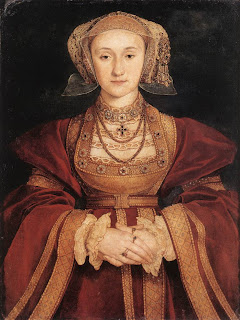
I was reading a book this evening about Anne of Cleves. Anne of Cleves is Henry VIII's fourth wife and they were married about six months. Henry called the poor woman "The Great Flanders Mare" and famously said "I Like Her Not!" upon meeting her for the first time. No one knows why this meeting went so badly, perhaps she was sick from a long sea voyage. Perhaps she was dressed oddly in Flemish clothing. Perhaps he did not like her because she had dark hair and her name was Anne, reminding him a little too much of Anne Boleyn, his great love and the most hated woman in his life, as far as appearances go anyway. Perhaps he did not like her because she did not realize the great fat man in front of her was the king and her husband dressed as a commoner so that he could surprise her. Who knows. Her portrait, painted by Holbein, is not ugly by any means. She looks quiet and attractive, and perhaps that was her downfall. Henry liked his women to sparkle, to be conversationalists and knowledgeable, not quiet and sensible. Although, his beloved Jane Seymour is said to have been "mousy." Anne Boleyn and Katherine Howard certainly sparkled, Katherine of Aragon fairly glittered, so this woman from Cleves who studied all things practical but not much as far as the arts were concerned must have been quite a change for him. However, by all accounts she was a kind and loving person. She continued to mother his children even after Henry divorced her, she agreed to the divorce amiably (although she did manage to keep her head this way) and she maintained a good relationship with Henry, Mary, Elisabeth and Edward until her death.
So, as context, or the need to use the past to understand the present is my greatest strength according to "Strength Finders", intellect coming in second, I realized something while I was reading this afternoon. Today I saw someone that I have not seen in quite a while. This person causes me to roll my eyes often as they talk non-stop about work and we have butted heads several times. However, when I was reading I realized that I have misjudged this person. Anne of Cleves was a woman denied a chance at marriage and motherhood, something women of her time wanted very much. I realized, while speaking with this person today that I actually really enjoyed our conversation, which is somewhat a new phenomenon for me. Thinking back to my past encounters with this person I remembered that once, only once, I saw her smile fade and I saw her tears. Tears of frustration at another wedding that was not hers, another child born to friends that would not be hers. This, I realized is why she talks about work all the time, to hide what is lacking. Stand on your strengths we are told, and so she does, she is good at what she does. She loves her job and this is what is important to her so this is what she talks about and this is ok. She, like Anne, has thus far been denied marriage and children, something women want both then and now, but she smiles and continues to love life.
Thinking more I thought about how I know that I am often misunderstood. I work in a very pro-cheerful environment, but one that I love dearly. Not being an over the top cheerful person, I think many people think that I am bitter and old before my time. Cynical too perhaps. This is not true, I just have nothing to match the enthusiasm which comes from four cups of coffee and several diet cokes a day. If I drank all of that caffeine my heart would explode. I sometimes wonder what is behind the smiles of the super happy, I know there are other emotions. Am I happy? Yes. Am I super duper chirpy happy? Umm, perhaps on a Europe bound flight or at the Pink concert earlier this year, otherwise, I am just living in reality, and reality for me is a calm, sedated place where bad things do exist, I can't pretend they don't. But every day life includes so many small joys, and I experience and love them, I am just quiet about it. I am who I am, and that is ok. Those who are always cheerful are who they are, and that is also fine. I think we exist in mutual acceptance and humor. I have a dry sense of humor, sometimes it is rather black, I talk ALOT and if someone is lucky enough to get into my heart, I will love them forever. But I also battle depression, it's a battle that never ends, and I do the best I can. I am reminded of that old commercial about "This is your brain, this is your brain on drugs, any questions?" I feel like, this is me on drugs that help me not live in blackness, So some days I live in light and some days I live in grey, any questions? But it does not mean that overall I am unhappy.
I compare myself to Anne Boleyn frequently, as I think she was much like me. She was smart, not beautiful but not unattractive, had a temper, and was very misunderstood and much maligned. A great smear campaign was conducted after her death and she became seen as a social climber, a shrew, and a mean spirited person. I don't think she was. She set up many charities to help the poor, I think she very much wanted to be liked and wanted to be a good queen. She had a personality that was very strong, and she either drew people in all the way, or pushed them away beyond reach. People either loved her enough to die for her or they hated her enough to ensure her death, there was no gray area. I have this type of personality, I am either loved or loathed, nothing much in between. Some say I am lazy, or become displeased because I do not do as they wish. Perhaps though, they should examine their own actions, who wants to feed those who bite your hand? I think Anne felt much the same way. She did not make much effort to charm those who did not like her. In fact, for several weeks she took as her motto "Ainsi sera, groigne qui groigne" which translates to "Grumble all you like, this is how it's going to be." She had it embroidered on her servant's livery, just to make sure everyone got the message. You have to love her somewhat dark wit, I must admit I laughed a good bit when I read this. I think the difference is, however, I have learned to back down, internalized some of my frustration, and chosen to ignore the slights of those who wish me ill. I know I have those about me who love me, and for this I love them, so to me, it is very simple. I often find myself thinking "Grace of a queen, you will sit here with the grace of a queen," though at that time I am thinking more of Katherine of Aragon than Anne. I often wonder how much I should endure though, before I run the risk of being put away, pushed away, not seen as valuable. Silence is not always healthy, but I try to pick my battles carefully. I wonder, however, how strong and careful I would be if I were left to stand on my own as Anne was. I would probably react somewhat the same way and lash out in fear and sadness, that appears to be anger. I know my friends and their love and acceptance give me strength to deal with difficulties. Anne did not have so many friends, she was closest with her brother, and people twisted this in order to do away with her. How wrong to twist the love of a brother and sister and true friends. Poor woman, misunderstood until the end.
I also have to admit, I did not want to take the Strengthfinders quiz and there was much grumbling and eye-rolling about it. I had to do it for work. However, I loved the outcome and how accurate it was. I love that it brought this strength to light, or articulated it so well for me. I guess it's something I always knew about myself but never put into words, figuring others would find it weird. But it's not weird, apparently it's somewhat common as it is listed in the results of this test that people pay to take. I like that it brought that to light. I also liked that it recognized empathy as one of my strengths. Maybe I don't show it everywhere, but the phone rings here day and night with my friends and their problems, because I love them, without judgement. Who knows when I could be in whatever their situation is? Like I said, once you are in my heart, I will love you forever, with a fierce loyalty. But that's my view on myself, my strengths, and how I need the past to understand it. Below is Holbein's portrait of Anne of Cleves. It hangs in a small alcove in the Louvre. I love her quiet serenity. She looks kind and pretty. Nothing like a Flanders mare.
So, as context, or the need to use the past to understand the present is my greatest strength according to "Strength Finders", intellect coming in second, I realized something while I was reading this afternoon. Today I saw someone that I have not seen in quite a while. This person causes me to roll my eyes often as they talk non-stop about work and we have butted heads several times. However, when I was reading I realized that I have misjudged this person. Anne of Cleves was a woman denied a chance at marriage and motherhood, something women of her time wanted very much. I realized, while speaking with this person today that I actually really enjoyed our conversation, which is somewhat a new phenomenon for me. Thinking back to my past encounters with this person I remembered that once, only once, I saw her smile fade and I saw her tears. Tears of frustration at another wedding that was not hers, another child born to friends that would not be hers. This, I realized is why she talks about work all the time, to hide what is lacking. Stand on your strengths we are told, and so she does, she is good at what she does. She loves her job and this is what is important to her so this is what she talks about and this is ok. She, like Anne, has thus far been denied marriage and children, something women want both then and now, but she smiles and continues to love life.
Thinking more I thought about how I know that I am often misunderstood. I work in a very pro-cheerful environment, but one that I love dearly. Not being an over the top cheerful person, I think many people think that I am bitter and old before my time. Cynical too perhaps. This is not true, I just have nothing to match the enthusiasm which comes from four cups of coffee and several diet cokes a day. If I drank all of that caffeine my heart would explode. I sometimes wonder what is behind the smiles of the super happy, I know there are other emotions. Am I happy? Yes. Am I super duper chirpy happy? Umm, perhaps on a Europe bound flight or at the Pink concert earlier this year, otherwise, I am just living in reality, and reality for me is a calm, sedated place where bad things do exist, I can't pretend they don't. But every day life includes so many small joys, and I experience and love them, I am just quiet about it. I am who I am, and that is ok. Those who are always cheerful are who they are, and that is also fine. I think we exist in mutual acceptance and humor. I have a dry sense of humor, sometimes it is rather black, I talk ALOT and if someone is lucky enough to get into my heart, I will love them forever. But I also battle depression, it's a battle that never ends, and I do the best I can. I am reminded of that old commercial about "This is your brain, this is your brain on drugs, any questions?" I feel like, this is me on drugs that help me not live in blackness, So some days I live in light and some days I live in grey, any questions? But it does not mean that overall I am unhappy.
I compare myself to Anne Boleyn frequently, as I think she was much like me. She was smart, not beautiful but not unattractive, had a temper, and was very misunderstood and much maligned. A great smear campaign was conducted after her death and she became seen as a social climber, a shrew, and a mean spirited person. I don't think she was. She set up many charities to help the poor, I think she very much wanted to be liked and wanted to be a good queen. She had a personality that was very strong, and she either drew people in all the way, or pushed them away beyond reach. People either loved her enough to die for her or they hated her enough to ensure her death, there was no gray area. I have this type of personality, I am either loved or loathed, nothing much in between. Some say I am lazy, or become displeased because I do not do as they wish. Perhaps though, they should examine their own actions, who wants to feed those who bite your hand? I think Anne felt much the same way. She did not make much effort to charm those who did not like her. In fact, for several weeks she took as her motto "Ainsi sera, groigne qui groigne" which translates to "Grumble all you like, this is how it's going to be." She had it embroidered on her servant's livery, just to make sure everyone got the message. You have to love her somewhat dark wit, I must admit I laughed a good bit when I read this. I think the difference is, however, I have learned to back down, internalized some of my frustration, and chosen to ignore the slights of those who wish me ill. I know I have those about me who love me, and for this I love them, so to me, it is very simple. I often find myself thinking "Grace of a queen, you will sit here with the grace of a queen," though at that time I am thinking more of Katherine of Aragon than Anne. I often wonder how much I should endure though, before I run the risk of being put away, pushed away, not seen as valuable. Silence is not always healthy, but I try to pick my battles carefully. I wonder, however, how strong and careful I would be if I were left to stand on my own as Anne was. I would probably react somewhat the same way and lash out in fear and sadness, that appears to be anger. I know my friends and their love and acceptance give me strength to deal with difficulties. Anne did not have so many friends, she was closest with her brother, and people twisted this in order to do away with her. How wrong to twist the love of a brother and sister and true friends. Poor woman, misunderstood until the end.
I also have to admit, I did not want to take the Strengthfinders quiz and there was much grumbling and eye-rolling about it. I had to do it for work. However, I loved the outcome and how accurate it was. I love that it brought this strength to light, or articulated it so well for me. I guess it's something I always knew about myself but never put into words, figuring others would find it weird. But it's not weird, apparently it's somewhat common as it is listed in the results of this test that people pay to take. I like that it brought that to light. I also liked that it recognized empathy as one of my strengths. Maybe I don't show it everywhere, but the phone rings here day and night with my friends and their problems, because I love them, without judgement. Who knows when I could be in whatever their situation is? Like I said, once you are in my heart, I will love you forever, with a fierce loyalty. But that's my view on myself, my strengths, and how I need the past to understand it. Below is Holbein's portrait of Anne of Cleves. It hangs in a small alcove in the Louvre. I love her quiet serenity. She looks kind and pretty. Nothing like a Flanders mare.

Subscribe to:
Posts (Atom)
